
Delta Rapidly Intensifies Into A Hurricane

Just 24 hours after being designated as a tropical cyclone, Delta became the 10th hurricane of the Atlantic season last night after hurricane hunters found winds above 75 mph. The storm has since continued to rapidly intensify and has maximum winds of 100 mph as of the 5 AM EDT NHC advisory.
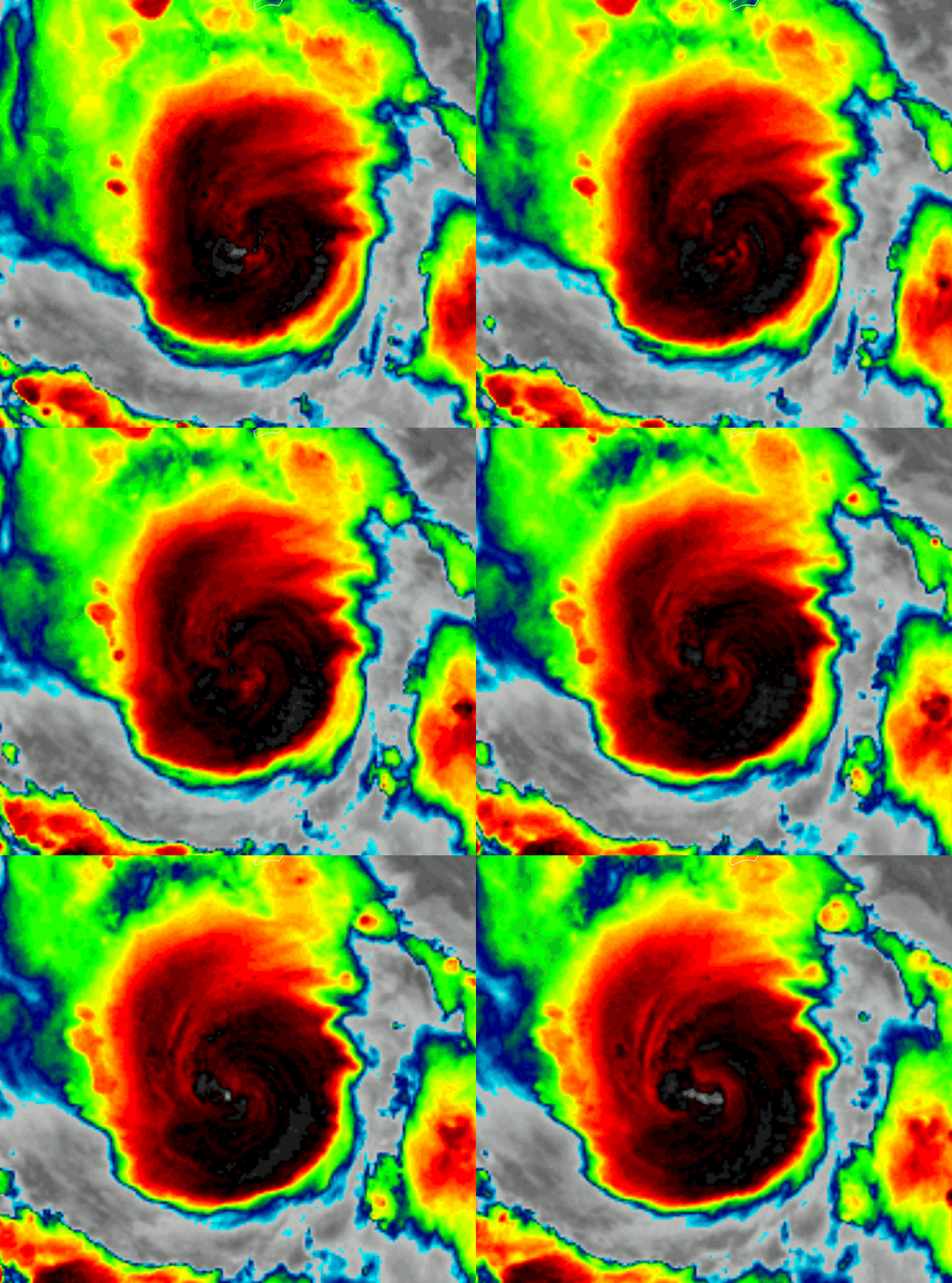
delta8.gif

Satellite imagery this morning doesn’t yet show an eye, but radar data from the Cayman Islands and recon plane observations confirm its existence. I suspect we’ll see an eye pop out on satellite imagery later this morning. Regardless of when exactly the eye decides to make an appearance, the storm is still rapidly strengthening and should continue to do so today. The environment over the NW Caribbean is about as favorable for intense hurricanes as possible with very low shear, no dry air in sight, and some of the warmest water on Earth. There’s no reason to believe Delta won’t continue rapidly intensifying until it makes landfall in the northeastern Yucatan Peninsula early tomorrow morning.
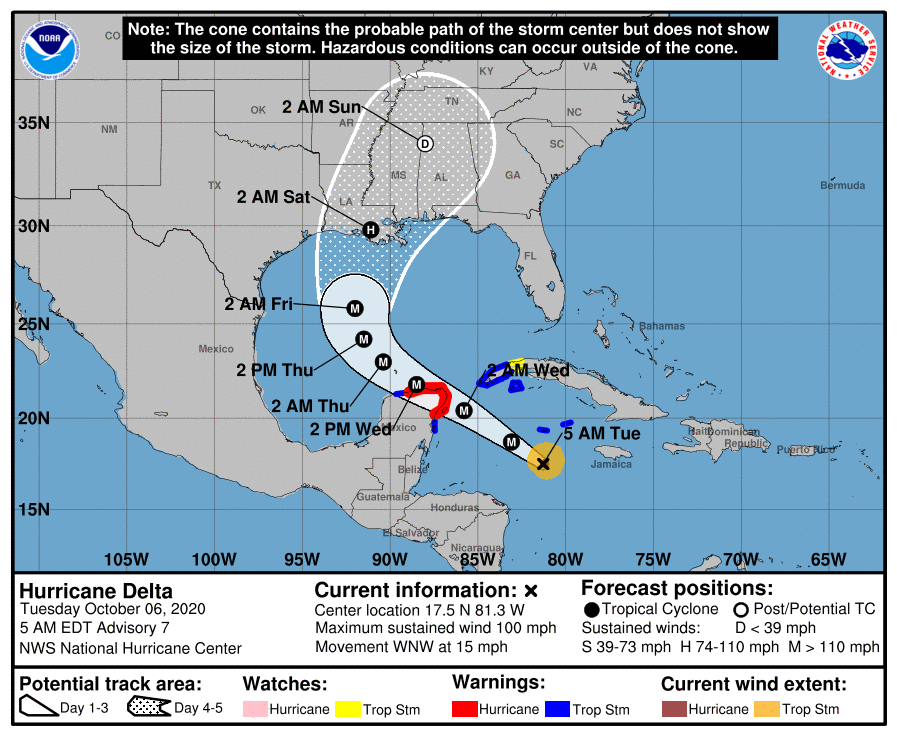
085525_5day_cone_no_line_and_wind.png

The current NHC forecast calls for Delta to continue moving northwest until Thursday, passing over or very near Cancun tomorrow morning. As the storm moves into the central Gulf of Mexico, it will turn to the north and northeast in response to an upper-level trough over Texas. While future shifts in track are certainly possible, the presence of this trough leads to higher-than-usual confidence in a track somewhere along the Louisiana coastline. That said, anyone from the Upper Texas coast to the Florida Panhandle needs to be watching Delta carefully. Regardless of where the eye makes landfall, impacts will extend far from the center.

-Jack

Issued: 10/6/2020

Potential Tropical Cyclone 26 Forms in the Caribbean

After a brief break in Atlantic tropical cyclone activity at the end of September, we have another new storm to watch in the Caribbean. Potential Tropical Cyclone 26 was designated today south of Jamaica after a tropical wave closed off a center of circulation but didn’t have quite enough organized thunderstorm activity to be deemed a tropical cyclone.

97157f28-b24e-416a-a305-e0803cc39a01.gif

This satellite loop of PTC26 highlights the lack of convective organization that has so far hampered the system’s development. I’d expect to see thunderstorm activity become more organized by tomorrow, at which point PTC26 will be designated TD 26 or TS Delta.

PTC26 will be moving NW for the next several days while bringing heavy rain and gusty winds to Jamaica and the Cayman Islands. The environment during this time will be nearly ideal for intensification and the storm is likely to become a hurricane before landfall in far western Cuba Tuesday evening. Because the storm will be moving briskly, interaction with Cuba isn’t expected to result in substantial weakening.

The official NHC forecast then calls for a continued northwesterly track into the central Gulf of Mexico before a turn north and eventually northeast towards Louisiana/Mississippi. This turn will occur in response to an approaching upper-level trough over Texas. This trough is likely to keep the storm away from Texas though the exact point of landfall is still uncertain.

Folks anywhere from western Louisiana to the Florida Panhandle should be watching this system carefully and dusting off their hurricane plans yet again in case watches and warnings go up at some point this week.

-Jack